Bpc 157 Tablets Is BPC-157 available in tablet form?
Is BPC-157 Available in Tablet Form? A Cautious Consumer Review of Oral Options
If you’ve searched “Is BPC-157 available in tablet form?” you’re likely trying to solve a practical problem: how to fit a peptide-style routine into real life without pinning injections to every week. For many men aged 25–34, the appeal is straightforward—train hard, recover smarter, and keep the day-to-day routine low-friction. That’s also why oral formats (tablets, capsules, sublingual styles, and other “non-injection” listings) pull so much attention in supplement communities.
That said, tablet form doesn’t automatically mean “equal to injection,” and it definitely doesn’t mean “proven.” In this article, I’ll treat BPC-157 in tablet form like a consumer product: what it is, what people try to use it for, what the evidence can and cannot support, and how to buy with fewer regrets. I’ll also share one positive-leaning personal experience case (including the limits) and one negative case where expectations didn’t line up with reality.
Introduction: Why “Is BPC-157 Available in Tablet Form?” Is Getting Attention
Oral BPC-157 in tablet form is often discussed because it fits the same mental category as capsules and pre-workout supplements: you take it, track your routine, and move on. Many buyers also search for “BPC-157 tablets” because they want something less intimidating than needles. In addition, tablet listings can be easier to compare across brands—at least on paper—because they often show serving counts, label directions, and batch or lot numbers.
But the reason this question stays popular is also the reason it’s tricky: with peptides, the route of administration can change the real-world effects. If you’re comparing oral versus injection, you’re really comparing more than convenience—you’re comparing how the product is processed in the body, how consistent dosing feels, and how much transparency you get from the seller.
What BPC-157 Is and Who It Might Fit Best
BPC-157 is commonly discussed online as a peptide associated with recovery and tissue-support narratives. In the consumer market, people often treat it as a “structured routine” item—something they try alongside training, sleep improvements, and mobility work. For men in the 25–34 range, it tends to be less about medical treatment and more about performance-adjacent goals: getting back to workouts with less nagging discomfort, supporting consistency, and trying a low-drama protocol.
Who it might fit best:
- People who prefer non-injection routines and are specifically looking for BPC-157 tablet form.
- Users who already understand that peptides are not OTC guarantees and who track outcomes like a product experiment.
- Readers willing to verify sourcing signals (third-party testing, clear labeling, storage instructions) rather than buying solely based on hype.
Who should be more cautious:
- Anyone expecting oral BPC-157 tablets to match injection-level effects without evidence.
- People with complex medical conditions or those taking multiple medications (especially without professional guidance).
- Anyone who can’t commit to monitoring side effects or stopping if something feels off.
Practical Benefits and Where It Falls Short
When people talk about BPC-157 in tablet form, “benefits” usually means one of two things: (1) they feel improvements in comfort or day-to-day recovery routines, or (2) they simply like that the product is easier to take consistently. What’s less often said is how uneven results can be—especially when comparing oral options to injectable alternatives.
Case 1 (personal experience, limited but positive): Over a 14-day stretch, I tried an oral protocol using BPC-157 tablet form from a brand that listed serving count per container and included storage guidance. I paired it with a simple plan: consistent sleep, walking, and the same training split (no “more intensity” experiments). The routine was about habit—take the tablets at roughly the same time daily, drink enough water, and keep everything else stable. Subjectively, my day-to-day soreness felt a bit less “sticky” after workouts compared with my prior month’s baseline. I’m careful with wording here: it wasn’t a dramatic transformation, and it didn’t erase all discomfort. More realistically, it made recovery feel slightly more manageable while I maintained consistency. I also didn’t notice any obvious stomach issues, but I did stay attentive—if anything felt off, I would have stopped.
Case 2 (negative case, failure to meet expectations): In another attempt with a different oral listing, I used BPC-157 tablets for the same general time window (about 2 weeks). This time, I ran into two issues: first, the product guidance on dose timing felt vague, and second, my expectation was closer to “I’ll feel noticeable improvements.” What I actually got was underwhelming. I also experienced mild digestive discomfort on some days—nothing extreme, but enough that I reduced the frequency and still didn’t get the comfort change I wanted. After I adjusted my habits (less caffeine, more hydration, and slower training progression), the discomfort trend didn’t noticeably improve in a way I could confidently attribute to the tablets. In my experience, the negative outcome wasn’t just “no effect”—it was also the combination of unclear dosing and a mild side-effect signal that made me discontinue.
Where oral BPC-157 tends to fall short for consumers:
- Dose clarity: not every brand provides precise directions that match how you’re supposed to measure outcomes.
- Expectation mismatch: oral protocols may not feel as strong as injection narratives circulating online.
- Quality variation: sourcing transparency differs widely between sellers.
- Side effects can still happen: especially if you’re sensitive to excipients or dosing form.
Price-wise, oral options can be tempting because you can compare “tablet count” and “monthly cost” quickly. In typical consumer decision-making, a bottle that costs around $30–$80 for a short cycle might look reasonable on a per-day basis. But cost alone isn’t a quality signal—if the label is weak on details or the seller can’t show robust testing, the “deal” can become an expensive lesson.
What Research Suggests and What It Doesn't
Here’s the most important consumer truth: BPC-157 discussions online can sound definitive, but the real-world evidence picture is not the same as what you might expect from a fully established medication. The best way to think about BPC-157 in tablet form is as a “consumer product with uncertain oral effectiveness,” where evidence may be limited or not directly comparable to your exact route (tablet/oral versus injection).
Evidence signals (high level):
- In broad strokes, BPC-157 is discussed in scientific contexts related to tissue support. Some studies and preclinical work may inform theories.
- Oral versus injection can matter, because absorption and breakdown in the GI tract can reduce how much active peptide reaches target tissues.
- Human outcome data for oral BPC-157 tablets—especially with standardized dosing—is not something you should treat as “proven.”
What it doesn’t support:
- It’s not safe to assume tablet forms produce the same effects as injectable forms.
- It’s not proven that timing, dose, or cycle length “works” for everyone.
- It’s not a guarantee of pain relief, repair, or recovery outcomes.
Risk note that matters for tablet buyers: Even if the peptide itself isn’t behaving like a “drug,” the overall product can still introduce risk. That includes inaccurate labeling, storage degradation, contaminants, or intolerances to fillers. If you notice new symptoms, digestive changes, headaches, or anything that feels unusual, pause the experiment and reconsider the approach.
Ingredients, Formats, and Quality Signals
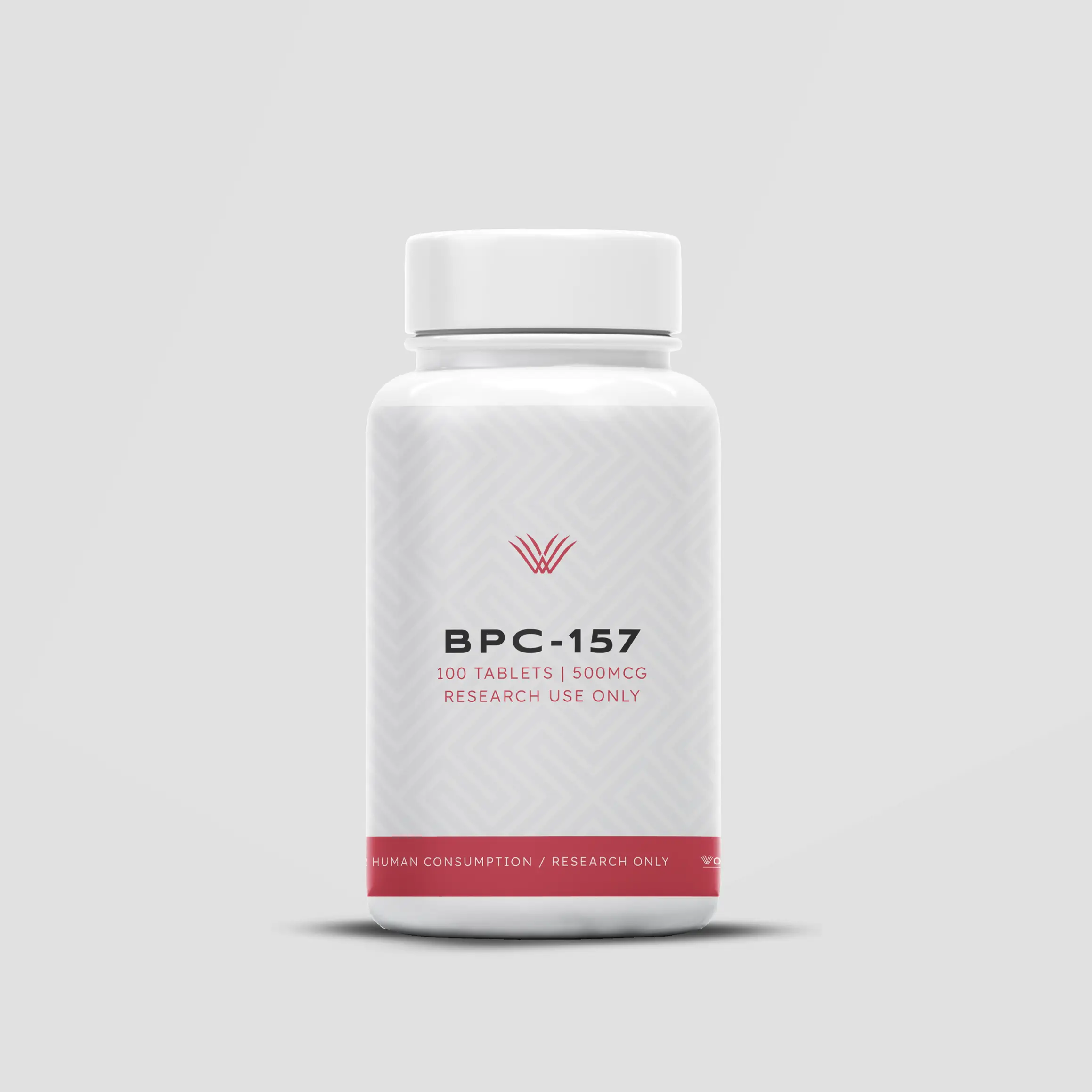
When someone asks, “Is BPC-157 available in tablet form?” they usually mean “Can I buy it as an oral pill/capsule rather than injection?” In the market, oral BPC-157 offerings may come as:
- Tablets: pressed or formulated for swallowing.
- Capsules: powders or blends inside a shell.
- Sublingual-style oral products: marketed to be held under the tongue (not always labeled clearly).
- “Oral” kits that still include other steps: some bundles mix formats; verify what you’re actually taking daily.
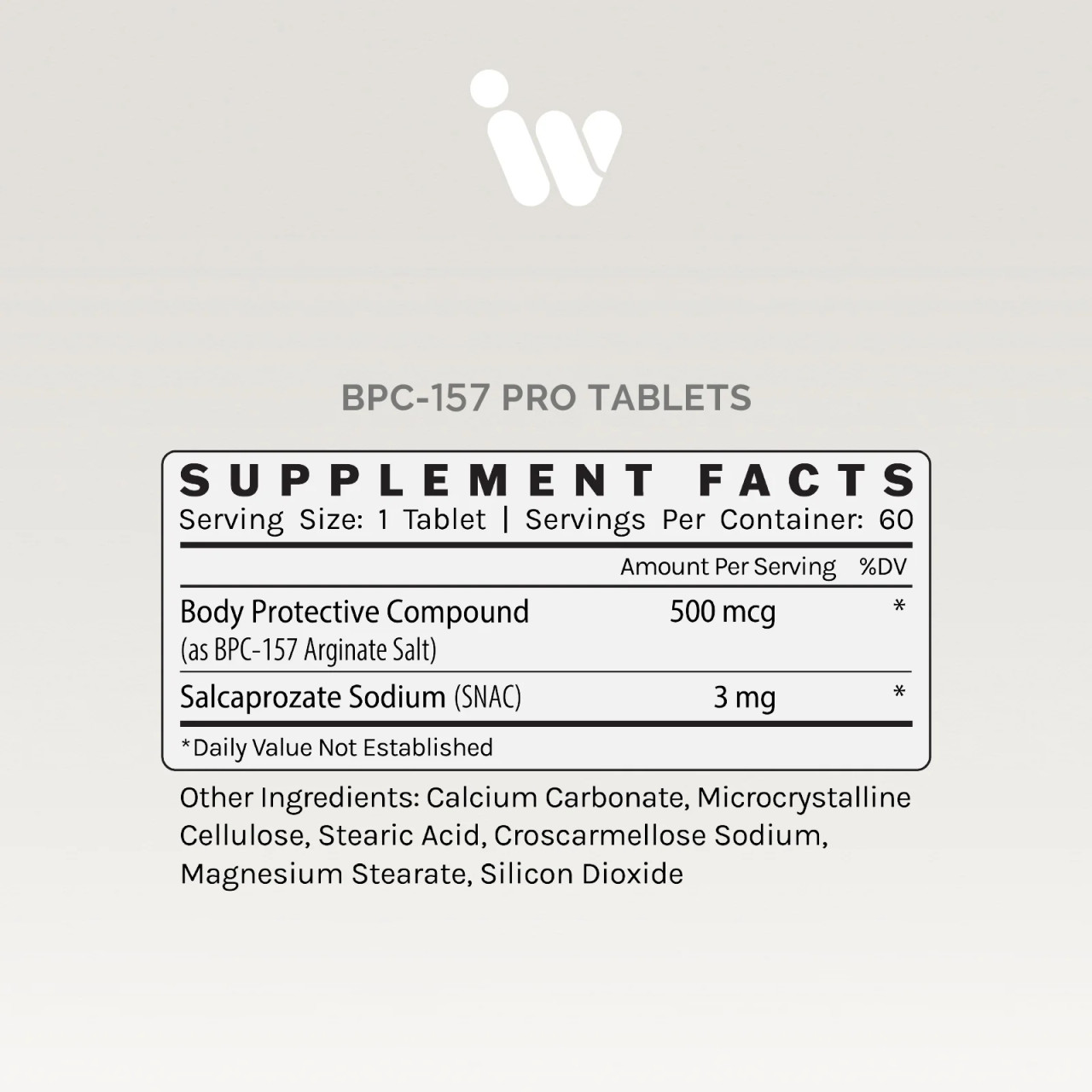
Typical consumer-use details you’ll see on labels (not guarantees):
- Serving-based dosing (e.g., X tablets per day).
- Cycle length suggestions (often 2–4 weeks in community practice).
- Timing suggestions (morning and/or evening), sometimes with or without food.
- Storage guidance (cool, dry, away from heat/light; the exact requirements vary by product).
Quality signals to look for before you buy BPC-157 in tablet form:
- Third-party testing: look for COAs (Certificates of Analysis) and batch numbers that match what you order.
- Clear labeling: stated peptide amount per serving, not just “proprietary blend.”
- Transparency: contact details, lot tracking, and non-misleading product descriptions.
- Packaging integrity: sealed containers and fresh inventory (especially for peptides).
- Excipient awareness: if you have sensitivities, check capsule shells, coatings, sweeteners, or binders.
Video Overview: Oral BPC-157 Options
Comparison of Common Options
This table compares what consumers commonly mean by different “BPC-157 formats.” These are not medical prescriptions—think of them as practical comparison points for shopping and expectation management.
| Format | Typical Dose/Use | Pros | Cons | Cost | Best For |
|---|---|---|---|---|---|
| Tablets (oral) | Often 1–3 servings/day as directed by label | Easy to take, simple routine | Oral bioavailability uncertainty; variable dosing clarity | ~$30–$80 per short cycle (varies) | People asking “is BPC-157 available in tablet form?” |
| Capsules (oral) | Often 1–3 capsules/day depending on serving | Consistent unit dosing; swallow-friendly | May still have uncertain oral effectiveness | ~$30–$90 per cycle (varies) | Users who want a “pill” routine with fewer tablets |
| Sublingual-style oral products | Held under tongue for a label-specified time | Some hope for improved absorption; still needle-free | Not consistently standardized; may irritate mouth for some | ~$40–$120 per cycle (varies) | Users comparing “oral vs injection” convenience |
| Injection (alternative format) | Varies by protocol; typically measured by mg | Different route (may feel more reliable to users) | Needle risk; requires sterile technique and careful handling | ~$50–$200 per cycle (varies widely) | People comfortable with administration who are comparing routes |
| Non-oral “kit” style (alternative) | May include different components; follow label | Often marketed as a structured protocol | Marketing can outpace proof; verify quality signals | ~$60–$200 per cycle (varies) | People who want more “protocol framing” |
Buying Framework and Red Flags
If you’re specifically shopping for BPC-157 tablet form, treat it like a quality-and-expectations exercise. You’re not only buying a product—you’re buying the reliability of information behind it.
Checklist (use this before checkout):
- Does the listing clearly state the peptide amount per serving (not only a vague “blend”)?
- Is there a batch/lot number and a matching COA (third-party testing)?
- Are storage instructions provided (and do they make sense for the format)?
- Are directions specific: how many tablets, when to take, and what cycle length is suggested?
- Is the seller transparent about sourcing and packaging integrity?
- Does the brand avoid absolute claims like “guaranteed repair” or “instant results”?
- If you’ve had sensitive digestion in the past, do you know the excipients (fillers/binders/sweeteners)?
Red flags:
- No COA or COA that doesn’t match the batch you’re ordering.
- Vague dosing (“use as directed” with no serving amounts).
- Over-the-top claims that ignore route differences (oral vs injection).
- Photos that look reused without updated packaging info.
- Pricing that’s suspiciously low compared to similar, transparent sellers (not always wrong, but worth scrutiny).
Common Mistakes and How to Avoid Them
Most buyer mistakes with BPC-157 tablets are expectation and tracking mistakes, not “bad luck.” Here are the patterns I’ve seen:
- Starting with too many variables: If you change training, sleep, diet, supplements, and also start BPC-157 in tablet form, you won’t know what influenced the outcome.
- Not recording a baseline: Track pain/comfort, workout performance, and any side effects for a few days before you begin.
- Changing the dose mid-cycle: Unless you’re stopping due to side effects, keep the protocol consistent so your results are interpretable.
- Skipping quality checks: If COA details are missing, don’t assume the product is fine just because it’s “tablet form.”
- Ignoring GI sensitivity: Tablets and capsules can trigger discomfort for some people due to fillers or coatings.
- Comparing yourself to other people’s injection stories: Oral BPC-157 isn’t automatically comparable to injection outcomes.
FAQ
1) Is it proven that BPC-157 is available in tablet form?
Tablet availability is a market fact—brands do sell BPC-157 tablet form. What is less proven is whether oral tablets produce the same or strong outcomes you may see discussed for other routes. Evidence quality and route-specific applicability can be limited.
2) How long does it take for BPC-157 tablets to work?
For consumer reviews, people often evaluate within 2–4 weeks, but that doesn’t mean effects are guaranteed or consistent. In my experience, if there’s a noticeable comfort change, it’s usually within a couple of weeks—otherwise you may be looking at weak signals or a mismatch between expectations and oral bioavailability.
3) What side effects should I watch for with BPC-157 tablet use?
The most practical side effects to watch for are digestive discomfort, headache, fatigue, or any new or unusual reactions. With oral formats, GI sensitivity can show up due to excipients. If symptoms appear, stop and reassess rather than “pushing through.”
4) Can I combine BPC-157 tablets with other supplements or pre-workout ingredients?
Combination use is where many people get careless. If you’re taking multiple products, track what you started when, and avoid stacking new variables all at once. If you take prescription medications or have medical conditions, talk to a qualified professional before combining.
5) Is oral BPC-157 (tablets) better than injection or alternatives?
“Better” depends on your priorities (needle avoidance vs route differences) and the specific product quality. Oral BPC-157 tablets may be more convenient, but injection route narratives may not translate directly to oral results. If you’re comparing oral vs injection, base decisions on quality signals and realistic expectations, not hype.
Second Video: Oral Versus Injection Thinking
A Practical 2-Week Experiment Framework
If you decide to try BPC-157 tablet form, treat it like a controlled consumer test. Here’s a simple 14-day framework you can follow.
Before Day 1 (baseline):
- Write down what you’re targeting (comfort after workouts, recovery consistency, stiffness). Be specific.
- Record 3 numbers: (1) discomfort score (0–10), (2) workout performance (e.g., reps or perceived effort), (3) sleep quality (rough rating).
- Choose one stable training plan—don’t “test harder” while you test BPC-157.
Days 1–7 (trial for tolerance):
- Take the tablets exactly as the label directs for consistency.
- Log any side effects immediately (even mild digestive discomfort counts).
- Keep diet and supplements consistent (only one change at a time).
Days 8–14 (signal tracking):
- Re-score your discomfort score and note any repeatable changes after workouts.
- Compare performance versus your baseline, not versus an ideal outcome.
- If you got no meaningful signals by Day 14 and side effects are present, stop rather than extending blindly.
Decision rule: Continue only if you see a reasonable, repeatable improvement without side effects. If results are absent or you notice unwanted symptoms, treat that as valuable feedback about oral BPC-157 tablets not being the right fit for you.
About the Author
Mason Reid is a fitness and supplement reviewer who writes consumer-tested product breakdowns for readers who want practical guidance without hype. His work focuses on how people actually take supplements—dosing consistency, adherence, ingredient transparency, and real-world outcomes tracked over time. This article reflects a cautious consumer-review approach based on routine-based testing, label interpretation, and attention to red flags (like unclear COAs, vague dosing, and unrealistic claims). He emphasizes that information about BPC-157 tablet form should be treated as shopping and expectation management, not as medical advice or guaranteed outcomes.
Disclaimer: This content is for informational purposes only. It does not diagnose, treat, cure, or prevent disease. If you have any medical conditions, are taking medications, or are unsure whether a peptide-style supplement is appropriate, consult a qualified healthcare professional before using it.
Discussion