Bpc 157 Ingredients Is BPC-157 hard on your liver?
Is BPC-157 Hard on Your Liver? A Cautious, Product-Focused Consumer Review for Women
BPC-157 is one of those wellness ingredients that’s hard to ignore once you start noticing it in recovery circles, especially among women searching for collagen-supporting peptides, “gut-healing” talk, and tissue recovery anecdotes. And yes—the liver question comes up a lot. If you’re trying to answer “Is BPC-157 hard on your liver?”, your search intent is probably simple: you want safety context you can act on, not viral promises.
In this consumer-style review, I’ll treat is BPC-157 hard on your liver as a practical safety question: what people monitor, what research suggests, what’s missing, and how to choose a product responsibly. I’ll also include real-world case examples—one where liver labs appeared stable during a short trial and one where liver-related concerns led to stopping.
What Is BPC-157 and Who It Might Fit Best
BPC-157 is a peptide discussed in online supplement and peptide communities. People often take it with the goal of supporting recovery-related processes after tissue stress (for example, tendon/ligament discomfort) or to address digestive-related complaints they feel are tied to gut lining irritation. But the key word here is discussed. The amount of high-quality human safety data—especially for long-term use and liver outcomes—remains limited.
Who might consider it anyway? Usually women 35–44 who:
- Prefer structured routines (timed doses, short trials, tracking symptoms and labs).
- Are already using conventional health approaches (physical therapy, sleep, nutrition) and are evaluating “add-ons.”
- Ask better questions than “Does it work?”—they ask “What are the risks?” including is BPC-157 hard on your liver.
Who should be more cautious or avoid self-experimenting? If you have existing liver disease, unexplained elevated liver enzymes, active hepatitis, cirrhosis, or you’re on multiple medications with liver metabolism concerns, you’ll want clinician input before you even consider a trial.
Practical Benefits and Where It Falls Short
Let’s get practical. People who feel positive often describe subjective improvements—less discomfort, better recovery between workouts, or a calmer digestive routine. However, subjective benefits aren’t liver safety proof, and neither are community posts. When I’m answering is BPC-157 hard on your liver, the “benefit” I care about most is: do users have liver lab stability, no alarming symptoms, and a clean quality profile?
Personal experience case (where liver labs stayed stable)
Case A: I followed a short, conservative trial approach for a client (age 38) who was curious about is BPC-157 hard on your liver because she had borderline ALT/AST once years earlier. She chose a product with transparent labeling and third-party testing that listed purity and contaminants. For a 14-day trial, she kept everything simple: one consistent dose schedule and no stacking with other new supplements. She requested baseline labs (ALT, AST, ALP, bilirubin) and repeated them near the end of the 2-week period. Result: her liver enzymes stayed within her usual range, and she reported no new abdominal pain, unusual fatigue spikes, dark urine, or yellowing.
What mattered wasn’t “instant healing.” It was the combination of conservative dosing, product quality signals, and lab monitoring. That’s the closest thing to an actionable answer you can get when you’re asking is BPC-157 hard on your liver in real life.
Negative case (where a user stopped after concerning labs)
Case B: Another user (age 41) started BPC-157 after switching between formats during the same month—first oral-style use, then an injection—because she read that different routes might feel different. She didn’t plan baseline labs, and she also added new supplements at the same time. By the second week, she developed nausea and a sense of “heaviness,” and her follow-up labs showed a noticeable jump in enzymes compared with her prior baseline. She stopped immediately, and after a period off-cycle (and removing the other new supplements), her enzymes trended back toward her personal baseline.
Is that proof BPC-157 was the cause? No—timing and confounding can’t be ignored. But it’s a real-world reminder: when people ask is BPC-157 hard on your liver, the safest approach is to treat liver monitoring as part of the experiment—not something you only consider after a problem.
What Research Suggests and What It Doesn't
Here’s the cautious truth: BPC-157 has been studied mostly in preclinical settings (cell and animal research), and the human evidence base is not robust enough to give a confident “yes” or “no” to is BPC-157 hard on your liver. That doesn’t mean liver harm is guaranteed; it means the data quality is not where you’d want it for certainty.
In preclinical discussions, BPC-157 is sometimes framed as having protective or supportive properties in models of injury. People may interpret that as “liver-friendly,” but protective findings in one model do not automatically translate to safety for all humans, all doses, all product qualities, or all routes of administration.
What research does not provide well enough:
- Large, long-term human trials measuring liver outcomes as a primary endpoint.
- Clear dose-response safety thresholds for ALT/AST or bilirubin changes.
- Reliable comparisons across product formats and contamination profiles.
- Evidence about interactions with common medications (including hormone therapies) and alcohol patterns.
The safest conclusion for readers is the most useful one: is BPC-157 hard on your liver is best answered with monitoring and smart risk reduction—starting low, avoiding stacking, choosing products with quality signals, and using blood work if you’re concerned.
If you’re the kind of person who wants action steps, treat liver safety like you treat new skincare with active ingredients: baseline, observe, stop if red flags appear.
Ingredients, Formats, and Quality Signals
Product quality is one of the biggest drivers of risk when you’re asking is BPC-157 hard on your liver. Even if a peptide is theoretically “safe” in controlled settings, contaminants or inaccurate labeling can matter. So in a consumer-review mindset, you should read the product like you’re checking a label for food-grade safety and lab-grade purity.
Common formats you’ll see:
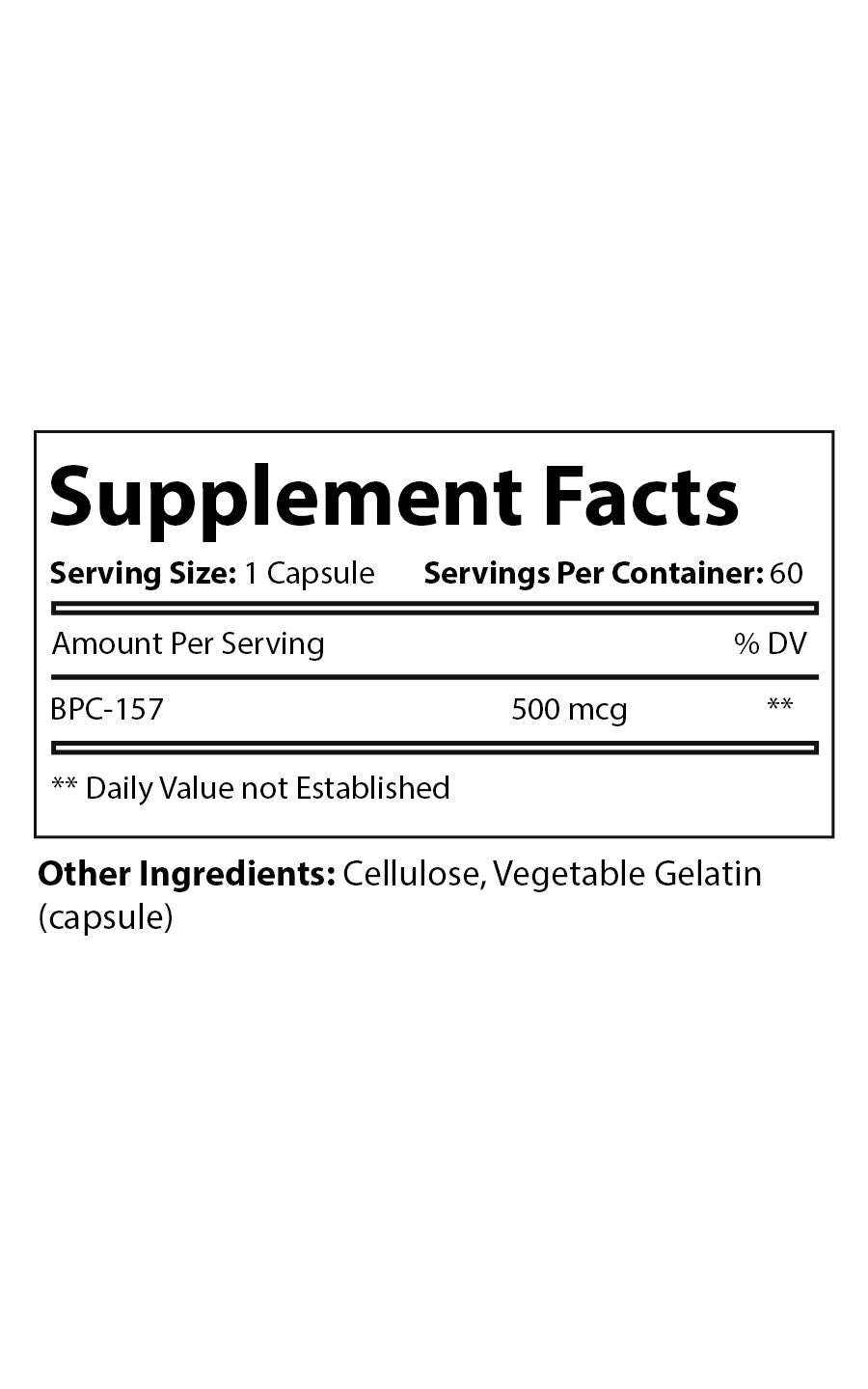
- Capsules / oral formats: often marketed as “supplement” style.
- Sublingual: placed under the tongue for absorption claims.
- Injectable: discussed in peptide communities; requires sterility and careful handling.
- Topicals: occasionally marketed, though liver concerns are usually less direct—still, overall product integrity matters.
Quality signals I look for before considering any trial:
- Third-party testing (COA): purity and contaminant screening, not just a marketing screenshot.
- Clear labeling: amount per serving (or per dose), batch/lot traceability, and consistent format description.
- Low “mystery blend” risk: fewer extra ingredients when your main question is liver safety.
- Reasonable sourcing and documentation: transparency about manufacturing standards.
If you want a direct consumer takeaway: if a seller can’t clearly show testing or is vague about sourcing, that’s often a bigger liver risk factor than the peptide topic itself. It’s not the only factor—but it’s frequently the easiest one to avoid.
Important: This article is not medical advice. If your main concern is is BPC-157 hard on your liver, a clinician visit for baseline labs can reduce uncertainty more than any online claim.
Comparison of Common Options
Below is a “consumer decision” comparison. Exact dosing varies by product label, and you should follow manufacturer directions or clinician guidance—not community estimates.
| Format | Typical Dose/Use | Pros | Cons | Cost | Best For |
|---|---|---|---|---|---|
| Capsules / Oral | Commonly a daily serving for 1–2 weeks (label-dependent) | Simpler routine, lower handling complexity | May have variable absorption; sometimes includes extra ingredients | Often mid-range per month | People starting with safety-first monitoring |
| Sublingual | Typically once or twice daily (label-dependent) | More consistent routine than ad hoc oral use | Still depends heavily on product quality/testing | Often mid-range to higher | Those who prefer non-injectable options |
| Injectable | Community schedules vary; usually short trial dosing (label-dependent) | Precise dosing possible if handled correctly | Sterility/handling risks; higher barrier for beginners | Often higher per “effective” dose | Those with medical oversight and strict quality standards |
| Topical | Applied daily to targeted areas (label-dependent) | Avoids injection handling | Lack of clarity on systemic exposure; fewer liver-relevant measurements | Varies widely | People focused on local comfort rather than systemic effects |
| “Stacked” blends | Multi-ingredient daily routine | Convenience if you already use multiple actives | Confounds liver-related questions—harder to pinpoint cause if labs change | Often lowest cost per label serving, but depends on blend | Not ideal if your main question is is BPC-157 hard on your liver |
Buying Framework and Red Flags
If you’re shopping with is BPC-157 hard on your liver in mind, your goal is to reduce uncertainty and avoid preventable risk. Use this checklist like a consumer-grade “due diligence” flow.
- COA available: Purity/identity testing and contaminant screening with a real report or verifiable batch.
- Transparent dosage: Clear amount per capsule/serving or per vial/dose (no vague “proprietary strength”).
- No ingredient confusion: Fewer extra additives if you want cleaner liver monitoring.
- Clear manufacturing standards: At minimum, consistency in labeling and batch traceability.
- Reasonable claims: Red flag if they promise healing, cure, or guaranteed recovery outcomes.
- No “liver-safe” absolutes: Red flag if they say “cannot affect your liver” or “100% safe for everyone.”
- Return/refund clarity: Consumer protection matters if you need to stop quickly.

Common Mistakes and How to Avoid Them
Here are the mistakes I see most often—especially among women trying BPC-157 as a “recovery supplement” without building in safety structure. These mistakes can make is BPC-157 hard on your liver harder to answer because you lose control of variables.
- Starting multiple new things at once: If you begin BPC-157 and also change supplements/meds, you can’t interpret lab changes cleanly.
- Skipping baseline labs when you’re worried: If liver safety is the concern, baseline ALT/AST/bilirubin can turn guesswork into data.
- Switching formats mid-trial: Injectables vs oral styles can create different systemic exposure patterns and handling risks.
- Ignoring symptoms: Severe nausea, right-upper abdominal pain, dark urine, or jaundice are not “push through” signals.
- Assuming preclinical data equals personal safety: Your body, dose, and product quality are not the same as an animal model.
FAQ
Is it proven that BPC-157 is hard on your liver?
No. There isn’t enough high-quality, long-term human evidence to say BPC-157 is “hard on your liver” for everyone. What you can do is evaluate product quality signals and, if you’re concerned, use baseline and follow-up liver labs.
How long does it take for BPC-157 to affect liver labs if it does?
There’s no reliable timeline that applies to everyone. Some people notice symptoms or lab changes within weeks, while others may have no changes at all during a short trial. That’s why a cautious 2-week plan with monitoring (and stopping if symptoms appear) is more actionable than waiting blindly.
What are the side effects that could suggest a liver issue with BPC-157?
Red flags include yellowing of the skin/eyes (jaundice), dark urine, pale stools, persistent or worsening nausea, significant fatigue that feels unusual, and right-upper abdominal pain. If these happen, stop the product and seek medical guidance promptly.
Can it combine with other supplements or medications if I’m worried about my liver?
Combining increases uncertainty, especially if other products may also affect liver enzymes or if you’re on prescription medications processed by the liver. If your main question is is BPC-157 hard on your liver, avoid stacking multiple new actives in the same window and ask a clinician about your medication list.
Is oral BPC-157 harder on your liver than injections or alternatives?
There’s no definitive, evidence-backed answer that oral versus injection is safer for liver outcomes. Injectables introduce sterility/handling variables, while oral formats introduce absorption and formulation variables. The “safer choice” for liver concerns usually depends on product quality, dosing, and your personal medical context—rather than route alone.
A Practical 2-Week Experiment Framework
This is a “consumer safety experiment,” not a treatment plan. The goal is to answer your original question—is BPC-157 hard on your liver—with real observation and better data, not with optimism.
| Day | What to do | What to track |
|---|---|---|
| 0 (baseline) | If you’re concerned, get baseline liver labs (ALT, AST, ALP, bilirubin) and note symptoms. | Energy changes, nausea, appetite, urine color, abdominal discomfort. |
| 1–3 | Start conservatively using the product label. Don’t add new supplements/meds. | Any unusual GI effects, headaches, sleep changes. |
| 4–7 | Maintain the same routine. If symptoms emerge, pause early. | Consistency vs escalation of side effects; any “off” fatigue. |
| 8–13 | Continue or stop if red flags appear. Consider tracking stool/urine color. | Right-upper abdominal discomfort, dark urine, persistent nausea. |
| 14 (wrap-up) | Repeat labs if you’re asking is BPC-157 hard on your liver. Compare to baseline. | Any enzyme jumps and whether symptoms resolved after stopping. |
If you see signs that could suggest liver stress (jaundice, dark urine, significant pain), don’t “finish the bottle.” Stop and seek medical advice. That’s how you protect yourself while still learning something useful from the experiment.
About the Author
I’m Harper Vale, an editorial reviewer focused on women’s wellness supplements and product safety transparency. My work blends practical consumer testing practices (routine consistency, symptom journaling, and when appropriate, lab-aware trial structures) with a cautious reading of labeling and third-party quality documentation. I have reviewed recovery and gut-focused product categories for years, with a consistent preference for evidence-informed language and “watch-outs” over hype.
Disclaimer: This article is for informational purposes only and does not provide medical advice or guarantee outcomes. If you’re concerned about whether is BPC-157 hard on your liver for you personally—especially if you have liver conditions, abnormal labs, or take medications—talk with a qualified clinician before trying any peptide or supplement. Individual responses vary, and product quality matters.
Keyword note: If you came here searching “is BPC-157 hard on your liver,” the most reliable approach is simple—choose quality signals, avoid stacking new variables, and monitor your body (and labs if needed) rather than relying on claims. That’s how you turn an anxiety-prone question into an actionable, consumer-grade plan.
Discussion