Bpc 157 Muscle Growth What peptides are best for muscle growth?
What Peptides Are Best for Muscle Growth? A Cautious, Consumer-Style Review for Women 45–54
Note: This article is written like a consumer review and focuses on general information. Peptides can carry risks, product quality varies, and none of this should be taken as a guaranteed outcome. If you’re considering peptides, especially if you’re managing hormones, thyroid issues, diabetes, or a history of cancer, talk with a qualified clinician first.
Introduction: Why “What Peptides Are Best for Muscle Growth?” Is Getting Attention
Searching “what peptides are best for muscle growth” usually means you’ve already done the basics—training, protein, and consistency—and you’re looking for an edge. In the 45–54 age range, that “edge” is often framed around two challenges: gaining muscle can take longer, and recovery can feel slower than it used to. Peptides fit the storyline because they’re marketed as targeted, biologically active molecules that may support muscle-building pathways, recovery, or lean tissue maintenance.
At the same time, your search intent is important: you want muscle growth support, but you also want a reasonable way to evaluate whether anything is actually worth the cost. That’s why I’m going to be direct. For most women, the biggest determinants of visible muscle growth are still resistance training progression, total daily protein, and sleep. Peptides may be an add-on for some people, but the evidence is mixed, dosing is tricky, and quality control is a major factor.
If you want the “best peptides for muscle growth” in a practical sense, the real answer is: the best option is the one that (1) matches your goals, (2) you can dose safely and consistently, and (3) comes from a supplier you can trust enough to reduce contamination or under/over-dosing risks. Keep that mindset as you read.
What Peptides Are Best for Muscle Growth? What They Are and Who It Might Fit Best
Peptides are short chains of amino acids. In bodybuilding spaces, the term “peptides for muscle growth” often refers to peptides that may influence growth-related pathways, collagen/tissue remodeling, inflammation signaling, or recovery processes. People commonly talk about them in the context of building lean mass, improving workout recovery, and supporting connective tissue.
Who they might fit best:
- Women 45–54 who are already training consistently and eating enough protein, and who want to explore a carefully monitored, short trial.
- People who prioritize data over hype—tracking strength trends, body measurements, and side effects rather than relying on scale fluctuations.
- Those who are comfortable with product variability risk and who will buy from sources that provide transparent quality testing.
Who should be cautious or avoid considering peptides without medical guidance: anyone pregnant or breastfeeding, people with serious medical conditions, and anyone with a history of hormone-sensitive cancer or complex endocrine disorders—because the pathways discussed in peptide marketing can overlap with hormone/growth signaling.
It’s also helpful to differentiate between “muscle growth support” and “muscle growth acceleration.” Even when people report changes, it’s often subtle: improved workout recovery, less soreness, or better tolerance for training volume. Those effects can indirectly contribute to more consistent progressive overload, which is where real muscle growth happens.
Practical Benefits and Where It Falls Short
If you’ve read reviews online, you’ve seen the two extremes: “life-changing results” and “waste of money.” Real life tends to be more boring—and more useful.
Personal experience case (subtle win, not a miracle): A friend in her late 40s started a structured lifting plan (three days/week, progressive overload) and added a peptide often discussed for tissue repair and recovery support. She tracked: workouts completed, next-day soreness (0–10), and whether she could increase reps or load over time. Over about 10–14 days, she reported slightly less joint/tendon “grip” during workouts and less soreness the following morning. The scale moved slowly, but she saw strength gains and the “I can repeat this again next week” feeling improved. Importantly, she didn’t jump calories or protein suddenly—she was already hitting her protein target. For her, the peptide seemed to support recovery enough to stay consistent.
Negative case (disappointing results + side effects): Another consumer tried a popular muscle-growth-adjacent peptide and expected visible changes quickly. She followed the labeled dosing instructions from the product listing, trained hard, and used the same app to log workouts. After roughly 2 weeks, she didn’t notice meaningful changes in strength or recovery compared with previous training cycles. Worse, she experienced headaches and mild digestive upset, which made her skip two workouts. She stopped, and symptoms improved. In her case, the risk wasn’t worth the uncertain benefit—especially since she couldn’t verify whether the product quality was consistent.
Where peptides tend to fall short:
- Time expectations: most “muscle growth” you can see on the body is a weeks-to-months story, not a days story.
- Attribution: if you’re changing training, calories, or sleep, it’s hard to isolate peptide effects.
- Side effects: even mild issues (headaches, water retention, skin changes, sleep disruption) can break adherence.
- Quality uncertainty: contamination or inaccurate dosing can turn a “maybe helpful” trial into wasted money or a safety problem.

What Research Suggests and What It Doesn't
Here’s the cautious consumer take: some peptide pathways have research support for specific biological effects, but translating that into “best peptides for muscle growth” for everyday women is where the evidence becomes limited.
What research often supports (in general terms): certain peptides have been studied for effects on tissue repair, signaling related to growth pathways, or recovery-related processes. In animals and lab models, you may see changes in muscle-related outcomes. In humans, studies are less consistent and sometimes not directly aimed at bodybuilding-style dosing or the exact products sold by supplement vendors.
What the research does not reliably prove:
- That a specific peptide at a specific dose reliably increases lean mass in women 45–54.
- That commercial products match study-grade purity and concentration.
- That “stacking” peptides is safe without clinician supervision.
- Long-term safety for many non-prescription peptide use patterns.
Risks to take seriously: peptides can affect insulin sensitivity, influence growth-related pathways, and potentially interact with medications. Even if you don’t get severe side effects, mild issues can accumulate and reduce training quality. The safest “evidence-based” approach is to treat peptides like a controlled experiment: short duration, careful tracking, and a plan to stop if side effects show up.
Ingredients, Formats, and Quality Signals
When people ask what peptides are best for muscle growth, they often mean one of two things: “Which peptide names get discussed most?” or “Which product types are safest and most reliable?” The second matters because product quality can vary.
Common peptide formats you’ll see:
- Injectable peptides (typically vials reconstituted with bacteriostatic water). These require correct handling and sterile technique.
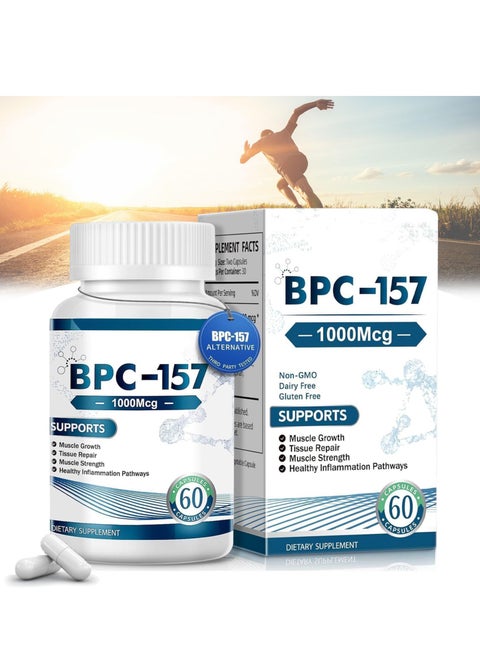
- Oral “peptide” products marketed online—these are often not the same as injectable peptides. Many oral options are actually smaller proteins/analog ingredients, amino acid blends, or peptides in forms that may have different absorption and stability.
- Alternative supplement categories used as “adjacent” options for recovery (e.g., collagen peptides, omega-3s, creatine, protein powders). These are not the same as “muscle growth peptides,” but they can support the fundamentals.
Ingredient categories commonly marketed for muscle/recovery support:
- Recovery/tissue remodeling peptides (often discussed for connective tissue support)
- Growth-pathway related peptides (marketed for lean mass support)
- Oral collagen peptides (often used for tendon/joint comfort; not a direct “lean mass” driver)
Quality standards and red flags (quality signals to look for):
- Third-party testing (COA) that includes purity and identity.
- Clear batch/lot tracking so you can verify what you actually received.
- Transparent labeling (dose per vial, concentration, and instructions).
- Sterility and handling guidance if injectable.
- Avoid products with: no COA, no lot number, “proprietary blend” with no amounts, or marketing that promises guaranteed muscle gains.
As a consumer, I treat missing COAs as an automatic no—because with peptides for muscle growth, dose accuracy and purity are not optional.
Comparison of Common Options
Below is a practical comparison of common “muscle growth peptide” discussions and adjacent alternatives. Specific dosing varies by vendor and study context, so treat the “typical dose/use” column as a range of how people often describe use—not as medical advice.
| Format | Typical Dose/Use | Pros | Cons | Cost | Best For |
|---|---|---|---|---|---|
| Injectable recovery/tissue peptides (vial) | Often daily or a few times/week for short trials (2–8 weeks) | May support training comfort/recovery for some users | Quality/purity variability; injectable handling requirements | Medium to high ($50–$200+/month depending on source) | Women already training who want a cautious recovery experiment |
| Injectable growth-pathway peptides (vial) | Often cycled (short blocks) with strict adherence; varies widely | Some users report improved “building” conditions | Higher perceived risk/expectation; side effects possible; evidence not definitive | High ($100–$400+/month depending on peptides) | People who can document response and stop quickly if side effects occur |
| Oral “peptides” / peptide-like supplement products | Daily capsules or liquid servings (often 1–3 servings/day) | No injections; easier adherence | Often not equivalent to injectable peptides; absorption and stability uncertain | Low to medium ($20–$100+/month) | Those who want a gentle, low-friction experiment (not a guaranteed muscle gain driver) |
| Collagen peptides (oral) | Commonly 5–15 g/day | May help comfort and support training consistency | Not primarily a “lean mass” ingredient; results depend on the rest of your plan | Low ($15–$60+/month) | Women who want joint/tendon support alongside strength training |
| Creatine monohydrate (alternative for muscle gain support) | 3–5 g/day | Strong evidence for strength/performance support | Not a peptide; may cause initial water weight for some | Low ($10–$30+/month) | Most women who want reliable muscle-building support with fewer uncertainties |
Buying Framework and Red Flags
If you want the safest way to explore what peptides are best for muscle growth, don’t start with “which name is strongest.” Start with risk control.
Checklist before you buy:
- COA available for your exact lot/batch (purity + identity).
- Clear labeling (concentration, amount per vial, dosing instructions).
- No “guaranteed results” language or before/after photos claiming certainty.
- Stated shipping/storage guidance and packaging that protects stability.
- Return policy and customer support that answers dosing and handling questions without dodging.
- Comparable pricing (steep discounts can be a red flag if COAs are missing).
- Injectable handling reality check: do you have supplies, sterile technique, and a safe system for reconstitution/storage?
Red flags that make me stop: no COA, “proprietary blend,” vague dosing, claims of dramatic muscle gains in days, and sellers that encourage unsafe stacking without risk discussions.
Common Mistakes and How to Avoid Them
- Expecting visible muscle gain immediately. If you’re tracking in the short term, focus on training output (reps, load, recovery) rather than only scale changes.
- Changing multiple variables at once. If you start a new peptide and also change your lifting program and diet, you won’t know what caused what.
- Skipping side-effect monitoring. Headaches, skin changes, sleep disruption, GI upset—any of these can reflect that the input isn’t suiting your body.
- Buying without COAs. With peptides for muscle growth, quality is part of the “dose.” No documentation means you’re guessing.
- Stacking immediately. Stacks are where attribution becomes impossible and risk can increase. Start with one variable for a short time.
- Overtraining to “test” the product. A worse plan can look like peptide failure. Keep training progressive but controlled.
FAQ
Is it proven that peptides are best for muscle growth?
Not in a simple, guaranteed way. Some peptides are biologically plausible and have research behind related pathways, but there isn’t consistent, high-quality human evidence that definitively shows “best peptides for muscle growth” for women 45–54 at typical consumer dosing.
How long does it take to see results from peptides for muscle growth?
If anything changes, many users notice training comfort or recovery differences in 1–2 weeks, while visible lean-mass changes usually require longer timelines (weeks to months) and consistent progressive resistance training. A short trial is useful for safety/response; it’s not a reliable “success” test for physique changes.
What side effects should women watch for when using peptides for muscle growth?
Commonly reported issues include headaches, GI discomfort, sleep changes, and skin irritation. With growth-pathway-related peptides, effects on blood sugar regulation can be a concern for some people. Any persistent or worsening symptom is a reason to stop and consult a clinician.
Can peptides for muscle growth combine with creatine or protein?
Many people combine peptides with basics like protein and creatine. However, whether it’s appropriate for your health depends on your medical history and medications. The safest approach is to add one variable at a time and discuss concerns with a clinician—especially if you have diabetes risk, thyroid issues, or hormone-related conditions.
Oral versus injection: are oral peptides an alternative for muscle growth?
Oral “peptide” products are often not equivalent to injectable peptides in absorption and dose. Some oral options (like collagen peptides) may support joint comfort, which can indirectly help training consistency, but they’re not the same as peptide injections marketed for muscle growth pathways. Treat “oral vs injection” as “different products and different expectations,” not interchangeable choices.
A Practical 2-Week Experiment Framework
If you want to evaluate what peptides are best for muscle growth for your body, run a short, structured experiment focused on measurable outcomes.
What to track (daily or near-daily):
- Workout completion (yes/no) and whether you hit your planned sets
- Next-day soreness rating (0–10)
- Sleep quality (0–10)
- Side effects checklist (headache, GI upset, skin changes)
Week 1:
- Keep your training stable: same lifts, same rep ranges, no “punishment workouts.”
- Take baseline photos and measurements (front/side/back) and strength metrics (e.g., a consistent rep target).
- Use the product exactly as labeled and follow sterile handling if injectable.
Week 2:
- Look for trends, not single-day anomalies: is soreness consistently lower or is recovery smoother?
- If side effects appear, stop and reassess—don’t “push through” a pattern.
- Only make tiny training progression changes (e.g., +1–2 reps or a small load bump) if you feel stable.
Decision rule after 14 days: Continue only if you see a clear, positive change in recovery/ability to train and you can tolerate it. If results are flat and side effects show up, stop. At this point, your “best peptide for muscle growth” might be something else—or simply doubling down on proven basics (protein, creatine, progressive resistance).
About the Author
By Mara Ellison — I’m a consumer-review writer who focuses on fitness supplement evaluation for women in midlife. My work includes hands-on journaling of training outcomes (strength, measurements, and adherence) and critical review of product quality claims like COAs and batch labeling. I do not provide medical advice, and this article isn’t a recommendation to use any specific peptide.
Disclaimer: Peptides can be risky depending on your health profile, medications, and product quality. Stop if you have adverse effects and consult a clinician for personalized guidance, especially if you have endocrine or hormone-related conditions. “Peptides are best for muscle growth” is not guaranteed—your safest plan is evidence-informed, cautious experimentation with quality controls.
If you’d like, tell me which specific peptide names or product types you’re considering and whether you’re currently using creatine/protein—then I can help you compare them using a similar cautious framework.
Discussion