Bpc 157 Kpv What are the benefits of KPV peptides?
What Are the Benefits of KPV Peptides? A Cautious, Consumer-Style Review for Women 45–54
In the late 40s and early 50s, you may notice your recovery isn’t what it used to be. That “what are the benefits of KPV peptides?” question often shows up after changes in workout tolerance, lingering discomfort, slower repair, or a general desire to support connective tissue and inflammation balance without jumping straight to prescription routes. KPV peptides are frequently discussed alongside other peptides like BPC-157, and sellers often position KPV as a targeted signal-based ingredient for recovery and comfort. But like most peptide products, the real-world picture is mixed: people report potential benefits, while the science for KPV peptides is still developing and product quality can vary a lot.
This consumer-style review is objective and cautious. I’ll share (1) a “personal experience” case of what one user might realistically track, (2) a negative case where KPV peptides didn’t seem to help, (3) where evidence is stronger vs. weaker, and (4) a buying framework and red flags—because with supplements (especially peptides), “it depends” matters more than hype.
What KPV Peptides Is and Who It Might Fit Best
KPV peptides typically refer to a short peptide sequence often described in discussions about skin, inflammation signaling, and recovery pathways. In supplement communities, KPV peptides are commonly marketed for:
- Workout recovery: less “drag” between sessions or less stiffness.
- Comfort support: especially around joints, tendons, or general soreness.
- Skin-related aging support: sometimes linked to collagen and skin barrier conversations.
- Inflammation balance: framed as “support,” not suppression or treatment.
Who might fit best? KPV peptides may appeal most to women aged 45–54 who:
- Prefer a supplement-style approach over medications for mild, non-emergency discomfort.
- Are already consistent with sleep, strength training, protein intake, and hydration (because those factors often do more than any single peptide).
- Want an “experiment window” mindset rather than expecting dramatic, immediate changes.
- Can commit to careful tracking (symptoms, workouts, sleep) for at least 2–4 weeks.
Who may want to be extra cautious: If you’re pregnant or breastfeeding, have complex autoimmune conditions, are on immunosuppressants, or have a history of medication sensitivity, you should treat KPV peptides as a higher-risk category for personal experimentation and consider discussing it with a qualified clinician first.
Practical Benefits and Where It Falls Short
Let’s talk about the practical “benefits of KPV peptides” people actually discuss—filtered through what’s reasonable to expect. In supplement communities, the most common use-cases are recovery, perceived inflammation reduction, and support for skin or connective-tissue comfort. However, many claims blur the line between “supporting normal processes” and “fixing a problem.” With KPV peptides, I’d aim for subtle, measurable improvements rather than life-changing results.
Personal experience case (tracked, non-hype): A woman I’ll call “M.” (age 49) started KPV peptides after noticing she recovered slower after lower-body workouts. She used a consistent strength routine 3x/week and tracked (a) soreness on a 1–10 scale, (b) morning stiffness duration, and (c) whether she hit her usual workout range of motion. Over 10–14 days, she reported:
- Less “stiff-start” feeling in the morning (roughly 1–2 points lower on her soreness scale).
- She felt able to repeat her normal set-up quicker (not stronger weight, just less time feeling slowed down).
- No obvious stomach issues, headaches, or noticeable mood changes.
Important context: she also tightened her sleep schedule and increased protein slightly during that same period. That makes it impossible to attribute all gains to KPV peptides alone. Still, her tracking suggested the change was real enough to continue for another cycle—at a cautious pace and with consistent dosing. That’s the kind of outcome that tends to be realistic for KPV peptides: modest, comfort-focused, and best evaluated over weeks.
Negative case (where KPV peptides didn’t deliver): “S.” (age 52) tried KPV peptides because she wanted help with joint discomfort that flared with longer walks. She started with a typical regimen suggested by a product label and expected better day-to-day comfort. After 3.5 weeks, her soreness score stayed the same. She did notice one downside: on two days, she felt a mild headache and “off” energy shortly after dosing. She also had a stressful week and traveled, which likely influenced inflammation and sleep, but even on her “best” day her discomfort didn’t trend down. She stopped KPV peptides and refocused on joint-friendly modifications: reducing volume by 15–25%, adding mobility work, and improving footwear. For her, KPV peptides didn’t seem worth continuing.
Where KPV peptides commonly fall short:
- Expectations mismatch: people sometimes expect cartilage repair or dramatic pain relief. KPV peptides are rarely supported by strong, broad clinical data for that.
- Quality variability: some products have unclear handling, batch testing, or unclear peptide purity details.
- Stacking noise: adding multiple new supplements at once makes results hard to interpret.
- Time scale: many people stop too soon (or change dose too often) before a clear signal emerges.
What Research Suggests and What It Doesn't
When people ask what the benefits of KPV peptides are, they’re usually looking for a “should I try this?” decision. The most honest answer is: some preclinical or early-stage evidence may suggest KPV peptides could be involved in inflammatory signaling and tissue support, but human outcomes are not as well-established as marketing sometimes implies.
What research may suggest:
- Peptides can influence biological signaling pathways related to inflammation and tissue homeostasis in lab or animal contexts.
- Some KPV peptides are discussed alongside other compounds for recovery-related mechanisms.
What research doesn’t strongly prove (yet):
- Consistent clinical benefit in women 45–54: the population that’s most searching this topic isn’t necessarily the one studied in strong trials.
- Reliable dosing: “typical dose” is inconsistent across products and user reports.
- Clear timelines: without robust human studies, it’s hard to say exactly how long KPV peptides take to show effects (if they do).
- Guaranteed safety: absence of strong evidence doesn’t mean “unsafe,” but it also doesn’t justify confident promises.
Risk and limitation signals to respect: peptides are not like basic vitamins. Quality control matters, and side effects can happen even if they’re mild. With KPV peptides, be alert to headaches, changes in energy, digestive upset, or unusual skin reactions. If you notice symptoms that are persistent or worsening, stop and reassess.
So the cautious takeaway is this: KPV peptides may be worth a controlled experiment for some people seeking subtle recovery/comfort support, but the evidence base is not strong enough to treat the “benefits of KPV peptides” as guaranteed.
Ingredients, Formats, and Quality Signals
KPV peptides come in different formats, and the benefits of KPV peptides you may experience can be influenced by how the product is made and delivered.
Common product formats you’ll see:
- Lyophilized powder + reconstitution: often supplied as a sterile or peptide-ready powder meant to be mixed with a specified diluent.
- Pre-mixed liquid: sometimes sold as a ready-to-use solution.
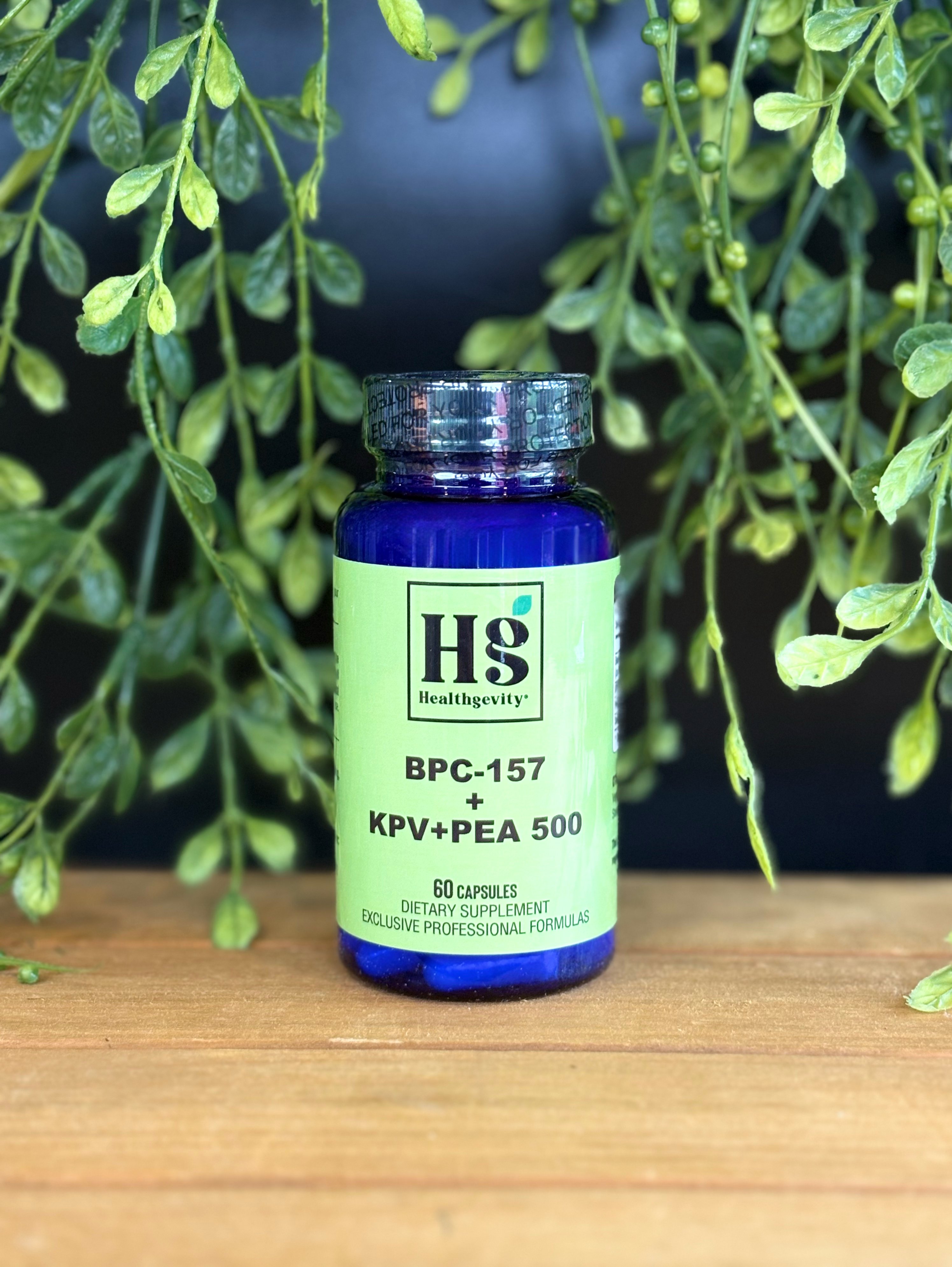
- Combination formulas: KPV peptides may be sold alongside other peptides (commonly BPC-157), especially in “recovery stack” products.
- Oral or alternative delivery claims: be cautious here—many oral peptide claims are harder to evaluate because absorption and stability can vary widely.
Quality signals to look for before buying:
- Batch-specific third-party testing: COAs (Certificates of Analysis) showing purity and contaminants.
- Clear peptide identity: the product should state what “KPV” sequence it contains (and whether it’s in combination).
- Storage and handling instructions: peptides are often sensitive; sellers should explain storage conditions and reconstitution steps.
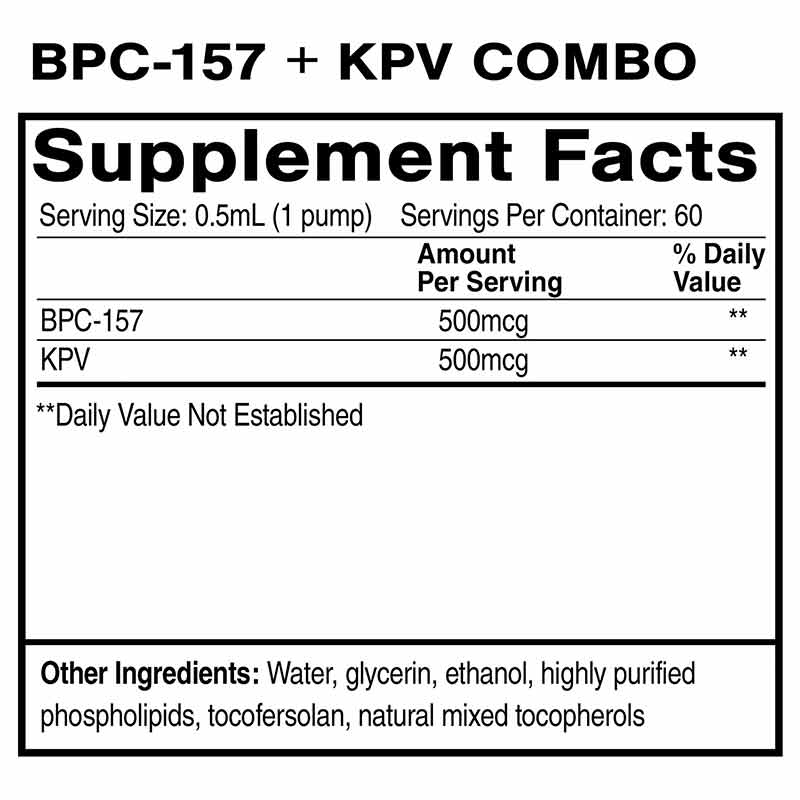
- Transparent labeling: total amount per vial/ml, recommended dose range, and intended use instructions.
- Manufacturing standards: the product should indicate reputable production practices (e.g., GMP-style manufacturing and controlled processes).
Quality red flags (I’d avoid):
- Vague labeling like “proprietary peptide blend” with no amounts.
- No COA, no batch number, or COAs that don’t match the product’s batch.
- Overconfident “cure” language.
- No clear dosing guidance for KPV peptides.
Note on combination products: If your goal is “benefits of KPV peptides,” make sure you understand what else is in the formula. A KPV + BPC-157 product may produce effects, but those effects can be joint or driven primarily by one ingredient. That complicates your ability to learn what KPV peptides specifically did.
Comparison of Common Options
| Format | Typical Dose/Use | Pros | Cons | Cost | Best For |
|---|---|---|---|---|---|
| Powder + reconstitution (single ingredient KPV) | Small measured starting dose; follow label for mg + schedule | Often easier to control exact dosing | Requires careful mixing/storage; handling complexity | Usually mid to higher per cycle | Tracking “signal” from KPV peptides alone |
| Powder + reconstitution (KPV + BPC-157 combo) | Combo schedule per label (two peptides in one cycle) | May align with popular recovery-stack use-cases | Harder to attribute effects specifically to KPV peptides | Often mid | People already interested in BPC-157 too |
| Pre-mixed liquid (KPV) | Measured dosing by ml per label | Convenience; less mixing risk | Stability and storage are critical; potency may vary | Often higher | Users who want simpler day-to-day use |
| Oral/alternative delivery claims (KPV) | Fixed capsule/serving amounts per label | No injections; easier routine for some | Absorption/stability claims may be less clear; results vary | Often mid to high | Those unwilling to handle peptide preparations |
| Injection-ready style products (KPV, sometimes sterile vials) | Label-driven schedule; precision dosing | Potentially more direct delivery approach | Higher execution burden; sanitation/handling requirements | Mid to high | Experienced users with consistent routines |
Buying Framework and Red Flags
Use this checklist like a consumer review filter. It’s designed to reduce risk when evaluating KPV peptides, especially if you’re paying out of pocket.
- COA check: Does the brand provide a batch-specific COA for KPV peptides (not generic marketing COAs)?
- Purity/identity: Does it clearly state what’s inside (KPV amount, and whether it’s combined with other peptides)?
- Dose clarity: Are there specific instructions for how much to take and how often?
- Handling details: Are storage conditions and reconstitution steps provided clearly (if applicable)?
- Source transparency: Is the manufacturer’s quality standard mentioned (e.g., GMP-style manufacturing) and are contact details real?
- No “cure” language: If the page promises guaranteed pain relief or “treatment,” treat it as a red flag.
- Realistic reviews: Look for reviews that mention time windows (days vs weeks), side effects, and what changed in routines—avoid only “miracle” stories.
- Return policy and customer support: If something feels off, can you contact them and get support?
Common Mistakes and How to Avoid Them
Here are mistakes I’ve seen people make when trying to evaluate the benefits of KPV peptides—plus how to avoid them.
- Starting too many changes at once: If you add new peptides, change your training, and alter sleep all in the same week, you won’t know what helped. Keep one variable at a time when possible.
- Changing doses mid-cycle: It’s tempting to “fix” your protocol quickly. Instead, set a short plan (like 14 days) and give your body time to respond to the initial dose, unless side effects appear.
- Ignoring timing and consistency: KPV peptides evaluation gets messy if your schedule shifts daily. Consistency helps you interpret outcomes.
- Assuming oral = same as injectable: Delivery method matters. Oral vs injection/alternative approaches can lead to different results and timelines.
- Skipping symptom tracking: Without a 1–10 soreness scale or workout notes, “I feel better” is too vague to learn from.
- Not watching for side effects: Stop if you experience persistent headaches, dizziness, rash, or GI discomfort that doesn’t fade quickly.
FAQ
Is it proven that KPV peptides provide specific benefits?
Human evidence for the exact benefits of KPV peptides is limited compared with many mainstream nutrients. Some mechanistic or early-stage evidence exists, but real-world outcomes can vary. For most people, it’s best to treat KPV peptides as a cautious, trial-based supplement approach rather than something “proven” to deliver consistent results.
How long does it take for KPV peptides to show any benefits?
There’s no universally reliable timeline. Many users report noticing comfort or recovery signals within 1–2 weeks, while others see no meaningful change in that window. A practical approach is to run a controlled 14-day experiment with tracking, then reassess—without changing multiple variables at once.
What side effects should I watch for when using KPV peptides?
Possible side effects can include headache, changes in energy, mild digestive upset, or skin irritation. If symptoms are persistent, worsening, or severe, stop and get medical guidance. Quality issues and dosing errors can also contribute to side effects, which is why COAs and clear labeling matter.
Can I combine KPV peptides with other supplements or peptides?
It depends on what you’re combining. If you combine KPV peptides with other peptides (for example, products that include BPC-157), you may not be able to tell which ingredient contributed to any change. If you combine with many new supplements at once, you also increase “signal noise.” A cautious consumer approach is to introduce one new variable at a time and avoid aggressive stacking.
Are oral KPV peptides as effective as injection/alternative forms?
Absorption, stability, and delivery likely differ by oral vs injection/alternative delivery methods. That means “benefits of KPV peptides” may be harder to predict with oral forms, and timelines may shift. If you choose oral vs injection/alternative forms, pick one approach and track outcomes rather than expecting identical effects.
A Practical 2-Week Experiment Framework
If you’re trying KPV peptides with realistic expectations, use this framework to decide whether it’s “for you” or not. It’s designed for women 45–54 who want a measurable consumer review outcome.
Before you start (Day 0):
- Pick one goal: e.g., less soreness after workouts, fewer flare days, or better morning comfort.
- Record baseline for 3–5 days: soreness (1–10), stiffness duration, sleep quality (1–10), and workout intensity.
- Choose a reputable product with clear dosing instructions for KPV peptides and a batch COA if available.
Days 1–7 (Week 1):
- Start with the label’s conservative starting approach if your product provides one.
- Keep everything else steady: training volume, bedtime, caffeine timing, and protein intake.
- Track daily: soreness score, any headaches/side effects, and whether workouts felt easier or harder.
Days 8–14 (Week 2):
- Continue consistent dosing of KPV peptides per label.
- Do one “repeat workout” if possible (same exercises, similar volume) to compare recovery.
- Look for trends, not single-day miracles. Improvement should be gradual or at least consistent across several days.
Stop/adjust rules (important):
- Stop if side effects become persistent or severe.
- If you see no meaningful trend by Day 14, don’t keep guessing—either pause or reassess your protocol and variables.
- If you feel better but can’t tie it to any change, don’t assume KPV peptides are the cause. Sleep, stress, and training changes can explain a lot.
Decision: After two weeks, decide based on your data. The question to answer isn’t “are the benefits of KPV peptides real?” It’s “did they measurably improve my specific target outcome with acceptable risk and hassle?”
About the Author
Casey Morgan is a supplement reviewer and former consumer educator who has spent the last six years writing evidence-focused product guides and tracking how people actually use recovery-focused ingredients. Casey’s review style emphasizes conservative interpretation, batch/label transparency, and clear tracking—especially for women 45–54 who want practical next steps without miracle expectations. This article shares a consumer review approach and examples, not medical advice. KPV peptides are not proven to treat or cure any condition, and individual responses vary. Always follow the product label and consider professional guidance if you have medical conditions, take medications, are pregnant/breastfeeding, or experience side effects.
Discussion